
Roux-en-Y gastric bypass
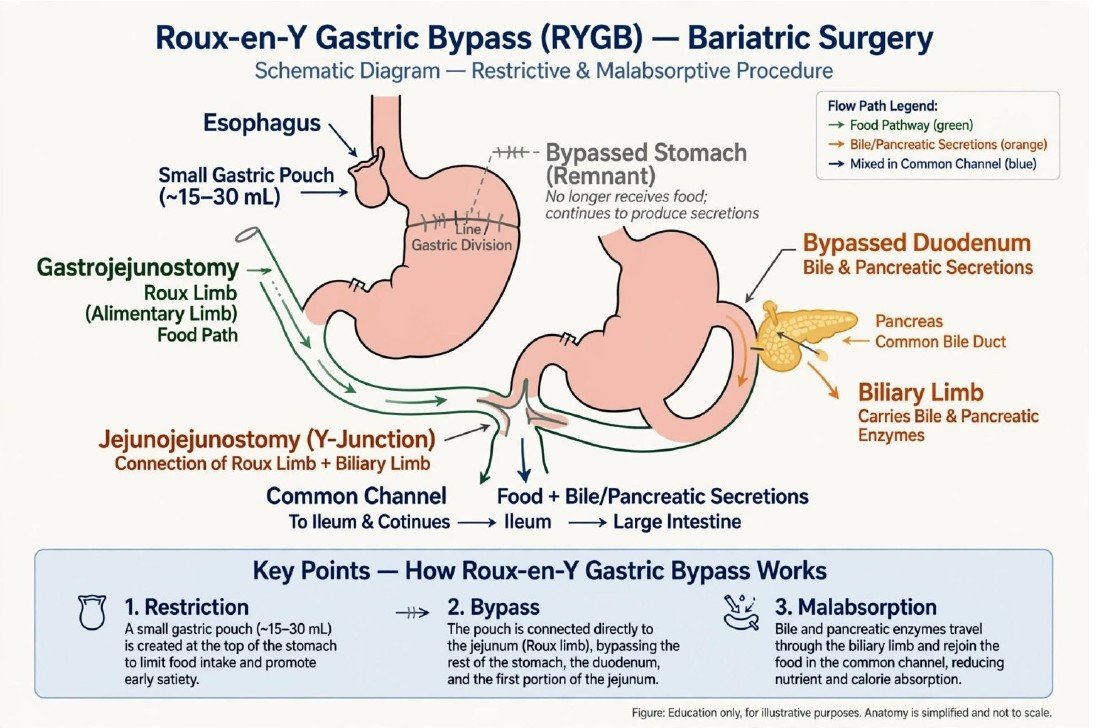
This operation creates a small pouch from the upper stomach and connects it directly to the jejunum, part of the small intestine. Food bypasses the remaining stomach, duodenum and part of the jejunum. Bile and pancreatic juices travel through a separate intestinal limb and meet food farther downstream at the Y-shaped connection.
Key details: The smaller pouch limits meal size. Changes in gut hormones and nutrient absorption also contribute to weight loss and improved blood sugar control. Lifelong nutritional supplements and follow-up are needed. Risks include leaks, ulcers, dumping syndrome, bowel obstruction and nutritional deficiencies.
Image clarification: The image is schematic and depicts the stomach in a confusing, duplicated form. There is one small pouch and one excluded stomach remnant; the remnant stays in the body and continues producing secretions.
Bariatric surgery: four procedures
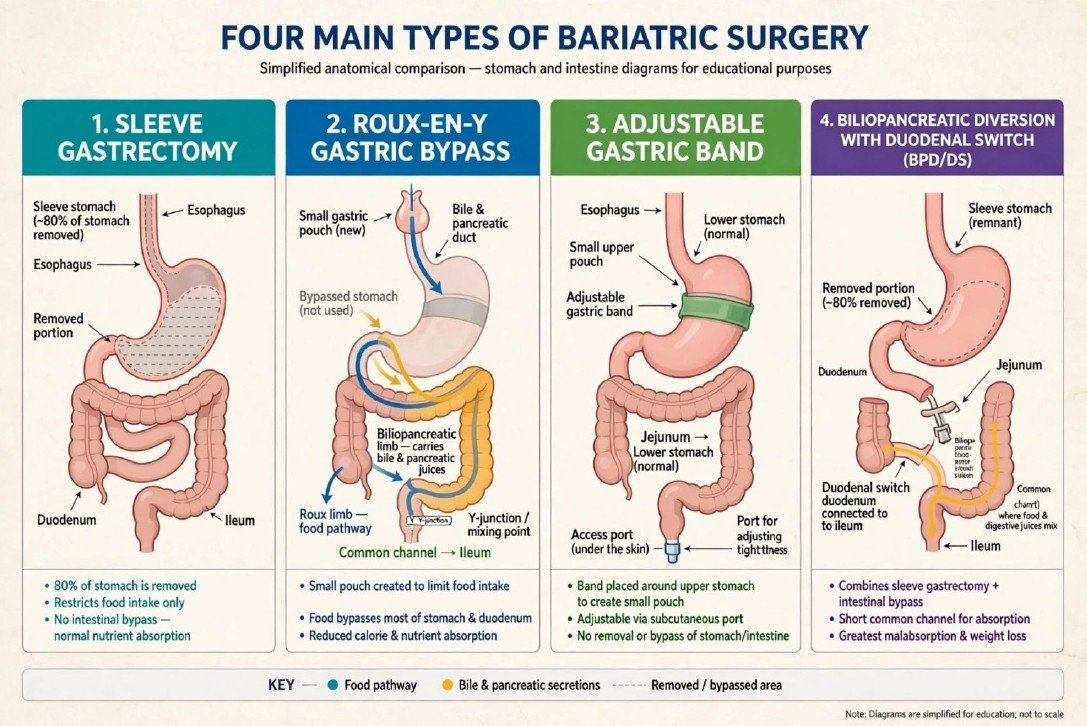
Sleeve gastrectomy: Removes about 80% of the stomach, leaving a narrow tube; it reduces capacity and changes appetite-related hormones.
Roux-en-Y gastric bypass: Creates a small pouch and reroutes food past part of the upper digestive tract.
Adjustable gastric band: Places an adjustable ring around the upper stomach, without removing stomach tissue or bypassing intestine.
Duodenal switch: Combines a sleeve-shaped stomach with a substantial small-intestinal bypass.
Key details: Duodenal switch has a greater risk of protein, vitamin and mineral deficiencies. All procedures need ongoing nutritional care; the appropriate choice depends on specialist assessment.
Image clarification: These are four established procedures, not an exhaustive list. Several arrows and bowel labels are misplaced. Sleeve surgery is not purely restrictive, and absence of intestinal bypass does not eliminate nutritional deficiency risk.
Sleeve gastrectomy
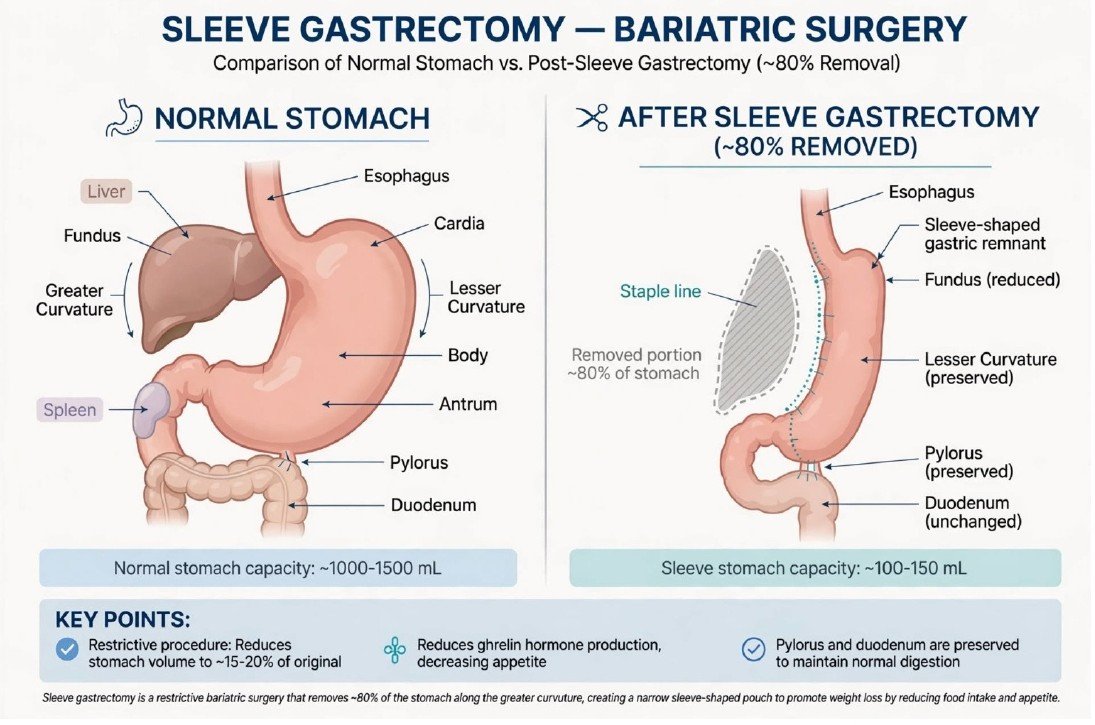
The image compares the stomach before and after sleeve gastrectomy. Around 80% of the stomach is removed, leaving a narrow, tube-shaped stomach. The pylorus, which controls stomach emptying, is preserved, and food continues into the duodenum without an intestinal bypass.
Key details: The procedure reduces the amount of food the stomach can hold and changes hormones involved in hunger and metabolism. It can support substantial weight loss and improvement in obesity-related conditions. The removed stomach cannot be restored. Risks include bleeding, staple-line leaks, acid reflux and nutritional deficiencies; long-term follow-up and supplements are important.
Image clarification: Several labels in the original diagram, including the fundus, stomach curvatures and duodenum, are misplaced. The fundus is largely removed during a sleeve procedure. The capacity figures shown are approximate and vary between patients.